
Share Barbara Jean Beam's obituary with others.
Invite friends and family to read the obituary and add memories.
Stay updated
We'll notify you when service details or new memories are added.
You're now following this obituary
We'll email you when there are updates.
Select your format and elements to print

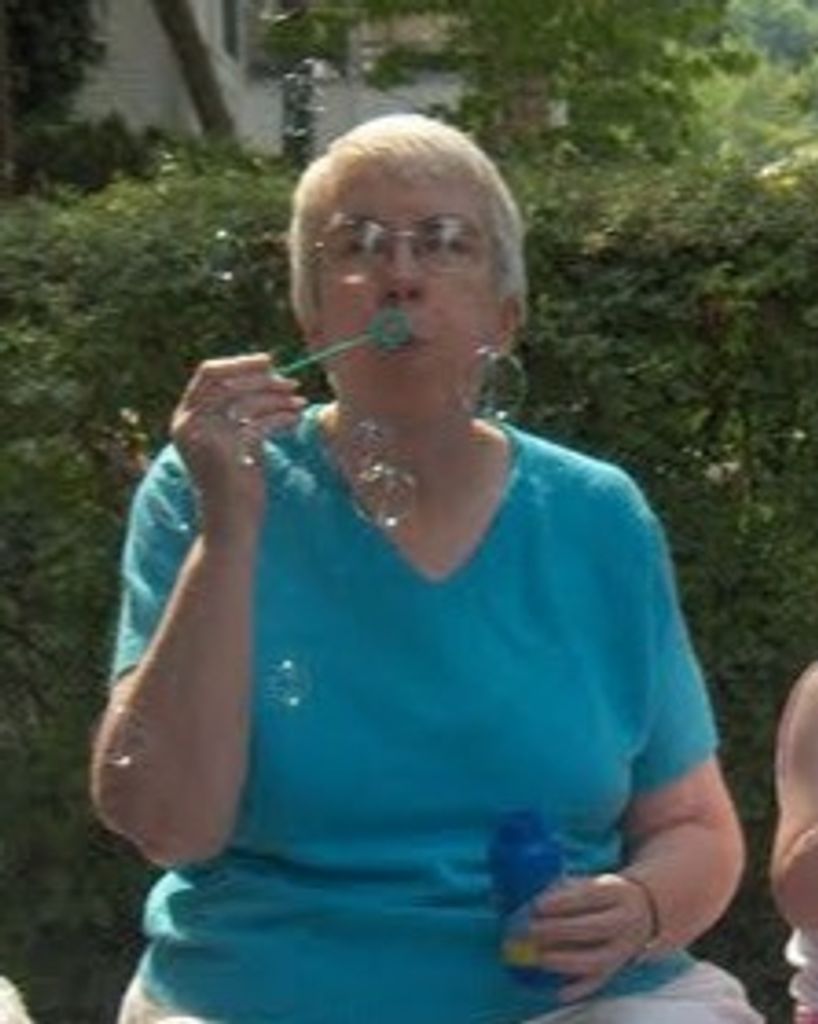


Barbara Jean Beam
Feb 6, 1941 — Nov 7, 2025
Olathe, KS
The Girl Born into a Love Story
Before Barbara ever drew breath, her life had already been shaped by a romance that seemed stitched together by fate. Here she lived in the soft edges of two entwined family histories–stories carried by immigrants, by dreamers, by those who found their way through hardship. In a quiet Kansas City neighborhood, a teenage girl named Jean Muehlbach carried the weight of early loss–her mother gone too soon, her teen years spent in the disciplined Victorian household of her grandmother, Catherine Condon Hale. Catherine was a woman of strong convictions and even stronger purpose; she founded a home for the blind that would become Alphapointe, leaving Jean with the impression that life was meant to be lived in service to others. Jean walked through life with a soft step and a sense of duty; the kind inherited from women who had survived more than they ever told.
Jean’s destiny shifted the day the boy next door—dramatic, impulsive, unforgettable Bob Wedow—first saw her ascending their shared driveway. He was taken with her instantly, something he declared shamelessly to his family. She, ethereal and cautious, did not yet know that this young man with flamboyant charm and a hunger for life would become her partner in everything that followed.
Their courtship was the spark that preceded Barbara’s life, and it contained all the contradictions that would shape the world she entered: Jean, the steady, bookish daughter of grocers, Bob, the son of a man deeply enmeshed in Kansas City’s political machine and the owner of underground casinos whose existence depended on shadows. Together, they were improbable. Together, they made sense.
They eloped once—caught by Jean’s grandmother in the nick of time—but married properly a year later. And then, on February 6, 1941, just before Jean’s twentieth birthday, they welcomed their first child. They named her Barbara Jean, a name that carried both her mother’s softness and her father’s irrepressible spark.
She arrived in a world that was complicated and changing, but above all, she arrived in a world where she was deeply, fiercely loved.
_____________________________________________________________________________________
Westport Childhood & the Seeds of Devotion
Barbara grew up in the Westport neighborhood of Kansas City, a place alive with the smells of corner bakeries and the energy of a post-war America reconstructing itself. She was the eldest of four—Bobby, Walter, and Anne following behind her at careful intervals, each child allowed their own moment in the spotlight of their parents’ attention. Being the eldest meant more than responsibility; it meant she spent years in the warm, undiluted glow of her parents’ love before the family expanded, years when the world felt small and safe and wholly hers. Even when her father was serving in WWII and stationed in Madison, WI, Barbara was able to stay connected to him as she and her mother were able to visit.
She was bookish from the beginning—drawn to words, languages, ideas. French delighted her, Latin challenged her, and her Catholic education introduced her to the profound beauty of ritual. As a child, she fell in love with the sacred details: the smoked sweetness of incense, the flicker of candlelight, the quiet choreography of devotion. These were not symbols to her; they were language.
The nuns who taught her – Sisters of Loretto - became the first women she saw living outside the boundaries of what society prescribed. They were intellectuals and caretakers; scholars and servants; women unburdened by the expectation of marriage. Barbara found in them a kind of freedom she hadn’t imagined. While still in high school, she taught catechism to a child with Down Syndrome and never stopped talking about the profound gentleness she found there. She believed deeply – even decades later – that people with special needs carried a particular blessing, a clarity of kindness that the world desperately needed.
At seventeen, stirred by both spiritual longing and admiration for these women, she entered the Loretto convent in Kentucky and became Sister Joseph Mary. For two years she lived in disciplined devotion: rising early for prayer, studying religious texts, teaching the vulnerable.
Her two years in the convent did not lead to lifelong vows, but they shaped her irrevocably. She learned devotion, obedience, study, contemplation—and that sometimes the things we step away from still remain part of us, echoing through our later lives.
When she left the convent, she felt less ready for the world than when she entered it. And yet she returned home with a heart sharpened toward service, with deep wells of empathy, and with a calling still germinating quietly.
____________________________________________________________________________________
Becoming Herself: Teacher, Wife, Mother
Barbara continued her education at the College of Saint Teresa, earning her degree in Education with minors in French and Psychology. She entered the world of special education, where her compassion became her greatest teaching tool.
In the summer of 1967, while supplementing her teacher’s income with a part-time job at a motel, Barbara met father and son Henry and Philip Beam. Henry – a sweet soul whom Barbara adored, told his son that Barbara thought he was cute. Phil—handsome, poetic, a guitar player and a forestry graduate of UC Berkeley—took her on their first date on Labor Day. Their connection was swift and they were married on Thanksgiving. Their daughters, Rosemary and Serena, born in 1971 and 1973, became the center of Barbara’s universe. And suddenly her world filled with baby songbooks, handmade playdough, French nursery rhymes, and the kind of deep, unfussy love that rooted itself in the everyday: bedtime stories, scraped knees, endless questions from verbose Rosemary and observant stares from shy, quiet Serena.
Whether singing “MacNamara’s Band” while making homemade play dough or quoting Chaucer, Barbara raised her girls in a home soaked in curiosity, music, and moral clarity. She taught them early that kindness mattered more than correctness, that people deserved dignity, and that allies stood up even when standing up was uncomfortable. These lessons were not cultural ideals then – they were just the way Barbara lived.
When Barbara became a mother, she slipped into the role with a tenderness that shaped her daughters’ lives forever.
Here was a mother who taught the purpose of a comma as if it were a small wonder of the world, who made everyday conversations into lessons of history, religion, justice, and compassion. Her daughters learned not just facts, but how to think, how to care, how to stand on the side of the vulnerable.
She sang to them—songs in English, songs in French, silly songs, lullabies.
She made papier-mâché on the kitchen table. She filled the house with books and music.
She told them the stories of their births.
She talked to them as if they were capable of understanding the world—and they did.
Life shifted in difficult ways during the 1980s. Her marriage ended. Single motherhood brought more weight than ease. Yet Barbara persevered, as she always did—with humor, with humility, with a steady devotion to her daughters.
In 1976 she had begun working at the Social Security Administration, where she later flourished in employee training and development. But in March of 1987, the trajectory of her life changed when she was struck by a car while crossing the street to St. Mary’s Episcopal Church downtown. The accident left her with lasting injuries and chronic pain—burdens that would have dimmed another person’s light. Barbara met them instead with her characteristic strength, carrying herself with grace, along with her little footstool to prop up her leg, that belied the effort required.
Still, beneath the strain of those years, a seed was stirring—one planted long ago in the convent, watered through motherhood, nurtured through every act of compassion she offered to friend or stranger.
Her true calling was making its way back to her.
____________________________________________________________________________________
A Return to Faith, A Return to Herself
Barbara and Phil had raised their children in the Episcopal Church—a compromise, initially. But for Barbara it became more than that. It became home.
The Episcopal tradition, with its ritual familiarity and progressive openness, offered her a place where her devotion could breathe freely.
St. Mary’s Episcopal Church in downtown Kansas City was an unusual place—one foot in the past with its reverent high mass, one foot in the future with a congregation that was evolving, colorful, wounded, hopeful.
Two communities—an African Methodist Episcopal group whose building had been lost, and a growing number of gay men who sought spiritual refuge—helped transform the church’s dwindling membership. This unlikely blend produced a worship space filled with warmth, music, shared meals, shared sorrows, and shared joy.
Barbara flourished there.
She made lifelong friends. She learned to laugh again. She discovered that ritual could be beautiful without being rigid, that faith could be righteous without being judgmental, and that the people society marginalized were often those who understood grace the most deeply.
Her best friend, Gary, entered her life through the church. They worshipped together, teased each other, swapped stories, gossiped gently, and cared deeply. When AIDS took him, Barbara became part of a collective grief that shaped a generation. She carried his memory, and the memories of so many others, into her ministry forever after.
___________________________________________________________________________________
The Call She Was Always Meant For
Through the church, Barbara entered the West Missouri School for Ministry, first becoming a deacon. Then a mentor told her about a program designed for people with life experience and pastoral gifts who could be ordained as priests without having to complete seminary in midlife.
After retiring from Social Security in 1997, she accepted a deployment a year later to Noel, Missouri—a small border town whose congregation was made up largely of Oaxacan immigrants working at the Tyson chicken plant. Many were Roman Catholic by heritage, Episcopal by circumstance. They were homesick, hardworking, and hungry for a priest who would meet them where they were.
Barbara became that priest. She became “Mother Barbara.”
It was there, at St. Nicholas Episcopal Church, filled with workers far from their homelands, that Barbara found the heart of her vocation. She offered kindness without pretense, ritual without rigidity, teaching without judgment. Wherever she went, she gave people the gift of being seen.
Her priesthood was marked not by pomp but by joy. Parishioners remembered:
- Her spontaneous laughter.
- The way she locked eyes with each person during the Eucharist.
- The bubbles she sometimes blew during sermons.
Her unwavering belief that no one was beyond God’s love.
- The bubbles she sometimes blew during sermons.
She learned their names, their stories, their losses. She baptized their children, married their young couples, buried their elders. She listened. She laughed. She stood at the altar rail with warmth and gave people the gift of being seen.
Her priesthood was never about authority. It was about joy. It was about the God she believed in—one who welcomed everyone, forgave everyone, loved without condition.
___________________________________________________________________________________
Grandmotherhood, Return, and Final Callings
In 2000, Barbara became a grandmother, or “Granny” as she was called. Erin filled her life with new purpose and wonder. When, in 2006, Erin’s father died suddenly, Barbara resigned her post and traveled to Australia to care for her granddaughter with the same love, fun, and teaching ways that she had shown her own children years before. She counted this time among the most meaningful acts of her life.
She returned to Kansas City and soon found a new spiritual home serving at All Saints Episcopal Church, continuing her ministry with charm, wit and joy until her retirement in 2014.
Her final home was built lovingly by her sister Anne in Lathrop, Missouri—a space designed to give Barbara comfort and dignity – including a tiny prayer chapel.
__________________________________________________________________________________
The Slow Fade of Memory
Not long after her final retirement, Barbara began showing the first signs of dementia. At first it was small things—names slipping away, stories she repeated over and over and forgetting directions. Then, gradually, the fog deepened. In 2016 she was diagnosed with Alzheimer’s disease. Her family moved through this new chapter with sorrow and devotion, witnessing her gradual shift from eloquent priest to quiet, loving, communicative and charming presence.
Her daughter Serena, living nearby, became her most constant advocate. Together they navigated the unpredictable path of dementia with tenderness and determination.
Barbara resided at Armour Oaks, Garden Terrace, and Aberdeen Village, with assistance from Ascend Hospice at the end. Her caregivers, whom the family remembers with gratitude, witnessed in her a sweetness that survived even the disease’s most painful turns. Many spoke of how she played the balloon toss with gusto, let them know when they had fussed over her hair for too long, giving the best hugs every morning, and that (shh, don’t tell!) Barbara was their favorite.
Even as Alzheimer’s wove its fog around her memory, it never dimmed the essence of who she was:
Still kind.
Still quick to smile.
Still responsive to music, especially hymns.
Still reaching for connection—even when words slipped away.
Music kept language alive longer. Touch—hand squeezes, kisses on the hands and cheek, gentle pushes—became her final vocabulary.
And even in the very last hour of her life, Barbara was still responding to touch, still finding ways to connect without words.
Her death, when it came, was quiet—almost ceremonial. A soft closing of a long chapter. A “soft-launching of her afterlife,” as her family tenderly described it.
Her “darling daughters,” as she called them, were at her side.
_________________________________________________________________________________
The Beliefs That Carried Her Home
Barbara’s theology could not be confined to doctrine. It was simple and radical:
Everyone gets into Heaven.
God’s love is bigger than people think.
Forgiveness is for everyone, even those who don’t know how to ask.
We are all going to be reunited someday.
It was this belief—more than any ritual, more than any sermon—that defined her life. She saw God in kindness, in service, in laughter, in bubbles blown during children’s sermons, in the unwavering belief that every person had something sacred inside them.
She lived her faith quietly but fully. It was the kind of faith people remember because it made them feel safe.
____________________________________________________________________________________
Passions, Pleasures, and the Texture of Her Days
Barbara’s joys were as eclectic as they were sincere:
Johnny Cash, Bing Crosby, Nat King Cole
Irish folk songs
Genealogy trails that led into the past
Presidential history—especially FDR
Church history and ritual
Jeopardy and Match Game reruns
Kansas City in all its flawed, familiar glory
Baseball, especially the Kansas City A’s and then the Royals
Books, always books
Every cat that ever curled up in her lap - especially Pancho, her favorite companion
She carried her interests with her like cherished objects in a pocket—pulled out, shared, smiled over, treasured.
__________________________________________________________________________________
The People She Loved & Those Who Loved Her
Barbara was preceded in death by her parents, Bob and Jean; her beloved brother Bobby; and cherished friends and parishioners who shaped her journey.
She leaves behind:
Her daughters, Rosemary G. Beam de Azcona and Serena (Jeff) Fox
Her granddaughter, Erin Azcona-Beam
Her siblings, Walter and Anne
Nieces Sherri, Jessica, and Melanie
Nephew Garry
Her final cat, Bridey
And countless others: students she taught, immigrants she served, parishioners she blessed, friends she laughed with, caregivers who held her hand.
Each one carries a piece of her story.
__________________________________________________________________________________
A Final Blessing
In the end, Barbara’s life was not defined by titles—nun, teacher, mother, priest. It was defined by moments:
The girl mesmerized by incense.
The teacher who believed every child had a gift.
The mother singing French nursery rhymes.
The friend laughing in the pews with Gary.
The priest blowing bubbles during a sermon.
The grandmother cradling a grieving family in Australia.
The woman with Alzheimer’s still reaching for hands, still remembering love long after she forgot words.
Her life was a testament to growth, resilience, and the unshakeable force of compassion. She walked through life, experiencing both hardship and joy. She transformed faith into welcome and service into love. She believed that every person carried a divine spark, and she lived her eighty-four years honoring that spark wherever she found it.
May her story continue to bless those who carry it.
May her memory shine long after her suffering has ended.
And may the world she believed in—a world of mercy, welcome, and joy—be made real through those who loved her.
Services
Visitation will be Friday December 12, 2025 4pm - 7pm at Aberdeen Village Assisted Living Room, please go to the Assisted Living entrance at 17510 W 119th St, Olathe, KS 66061
Memorial Service will be Saturday December 13, 2025 at 2pm at Grace & Holy Trinity Cathedral, 415 W 13th St, Kansas City, MO 64105
Inurnment will immediately follow the memorial service in the Grace & Holy Trinity Cathedral Memorial Garden.
Reception will immediately follow the inurnment in the Grace & Holy Trinity Cathedral Founders’ Hall.
In lieu of flowers, the family encourages donations to one of the following:
Aberdeen Village Good Samaritan Fund or Scholarship Fund, 17500 W 119th St, Olathe, KS 66061
Episcopal Relief & Development Fund, PO Box 5121, Boone, IA 50950
St Nicholas Episcopal Church, 101 Sulphur St, Noel, MO 64854
Service Schedule
Past Services
Visitation
Friday, December 12, 2025
4:00 - 7:00 pm (Central time)
Aberdeen Village Assisted Living
Visitation will 4:00-7:00pm Friday, December 12, 2025 at Aberdeen Village Assisted Living, 17510 West 119th St., Olathe, KS 66061
Memorial Gathering
Saturday, December 13, 2025
2:00 - 3:00 pm (Central time)
Grace & Holy Trinity Cathedral
Interment will immediately follow the memorial service in the Grace & Holy Trinity Cathedral Memorial Garden.
Reception will immediately follow the interment in the Grace & Holy Trinity Cathedral Founders Hall.
Guestbook
Visits: 546
This site is protected by reCAPTCHA and the
Google Privacy Policy and Terms of Service apply.
Service map data © OpenStreetMap contributors